TL;DR
- A BVI company can open a bank account, but usually outside the BVI in places like Hong Kong, Singapore, or the UAE. Local BVI banks exist but have limited services. Most businesses choose larger financial hubs.
- Banking is the hardest part, not incorporation. Strict KYC and AML checks require full documentation on the company, owners, and source of funds. Approval depends heavily on profile and preparation.
- BVI companies benefit from zero tax on offshore income and flexible structure. They are legally recognized and widely used for holding, trading, and investment. Tax obligations still depend on where the company is managed.
- The process involves incorporation, preparing documents, choosing the right bank, and submitting for approval. Most accounts can be opened remotely but may take 1 to 6 weeks. Minimum deposits vary by bank.
- The key rule is to secure a banking option before setting up the company. Not all banks accept BVI structures, and rejections are common without proper setup. Coordinating incorporation and banking increases approval success.
The British Virgin Islands is a leading jurisdiction for offshore company formation, and for good reason. Zero taxation on foreign income, flexible governance, minimal ongoing obligations, and a credible legal framework built on English common law make it a natural home for holding companies, investment funds, trading vehicles, and asset protection structures used by global investors.
But one question comes up almost every time: once you have a BVI company, where do you bank?
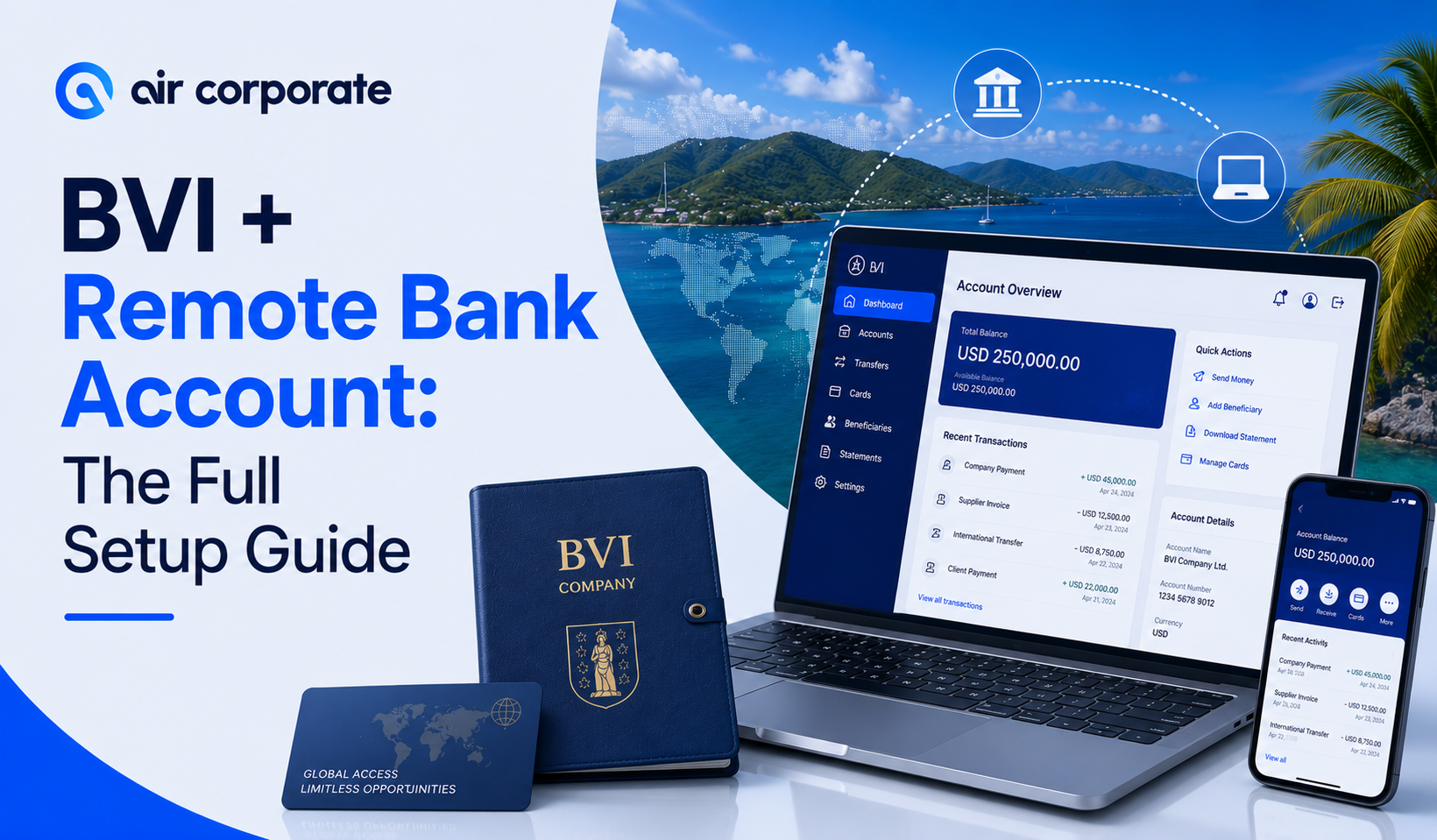
This guide answers that directly. It covers what a BVI company is, how taxation works, what banking options are available, how to open a bank account, and what documents you will need.
What Is a BVI Company?
A BVI company is a business entity incorporated under the BVI Business Companies Act in the British Virgin Islands, a British Overseas Territory in the Caribbean.
The British Virgin Islands has been one of the most popular offshore company jurisdictions in the world for over four decades, with more than 500,000 companies registered there.
Under BVI law, a BVI business company is a separate legal person with full capacity to enter contracts, hold assets, sue and be sued, and carry on business independently of its shareholders.
BVI Tax Treatment: What Offshore Companies Actually Pay
The British Virgin Islands operates a territorial tax system. BVI companies are exempt from all local taxation provided they do not conduct business within the British Virgin Islands. This means no corporate tax, no capital gains tax, no income tax on earnings generated abroad, no withholding tax on dividends, and no inheritance or estate taxes.
The BVI is not a blacklisted jurisdiction. It complies with international standards including the OECD Common Reporting Standard (CRS) and the US Foreign Account Tax Compliance Act (FATCA). The BVI Financial Services Commission actively supervises banking and fiduciary activities in the territory, and the BVI has signed multiple Tax Information Exchange Agreements with other jurisdictions.
One important point for founders is the distinction between where a company is incorporated and where it is tax resident. Tax residency depends on the place of management rather than the jurisdiction of formation. A BVI offshore company managed from Hong Kong, the UK, or Singapore may have tax obligations on offshore income in those jurisdictions depending on local rules.
Economic Substance Requirements
BVI companies that carry on a relevant activity within the territory must meet economic substance requirements, demonstrating genuine operations in the British Virgin Islands with adequate staff, premises, and core income-generating activities.
The relevant activities include banking, insurance, fund management, financing, leasing, headquarters services, shipping, intellectual property, and holding company activities. Each relevant activity must be supported by real substance in the BVI. Most passive holding companies satisfy reduced requirements through their registered agent.
Does the BVI Have Banks?
Yes. The British Virgin Islands has a regulated banking sector governed by the Banks and Trust Companies Act of 1990 and supervised by the BVI Financial Services Commission. BVI offshore banks must comply with international standards including CRS and FATCA, undergo an obligatory annual audit, and meet strict capital requirements, including a minimum paid share capital of at least USD 2,000,000 for a general banking license.
BVI banks are known for strong confidentiality. There is no public disclosure of company directors or shareholders required, and the BVI banking sector has maintained a reputation for stability. A BVI bank account typically operates in US dollars, though some BVI offshore banks offer accounts in EUR or GBP as well. Opening an account in BVI gives clients access to international wire transfers and 24/7 internet banking.
However, there is a practical reality founders need to understand. The BVI banking sector is small. BVI offshore banks primarily serve a limited number of clients, and most BVI offshore banks do not offer the breadth of services available at major international banking hubs. For BVI companies with active trading, investment, or operational needs, banking in the British Virgin Islands locally is rarely the most practical option.
Where Do Most BVI Companies Actually Bank?
The majority of BVI offshore companies open corporate bank accounts outside the British Virgin Islands. The most common choices are as follows, each offering a different mix of banking services:
| Jurisdiction | Why BVI Companies Use It |
|---|---|
| Hong Kong | Strong international banking infrastructure, multi-currency accounts, experienced with BVI structures |
| Singapore | Stable regulatory environment, wide range of banking services for international business |
| Switzerland | Strong privacy protections, established offshore banking reputation |
| UAE (Dubai) | No personal income tax, growing suite of banking services for international business |
| Mauritius | Gateway to Africa and Asia, familiar with offshore structures |
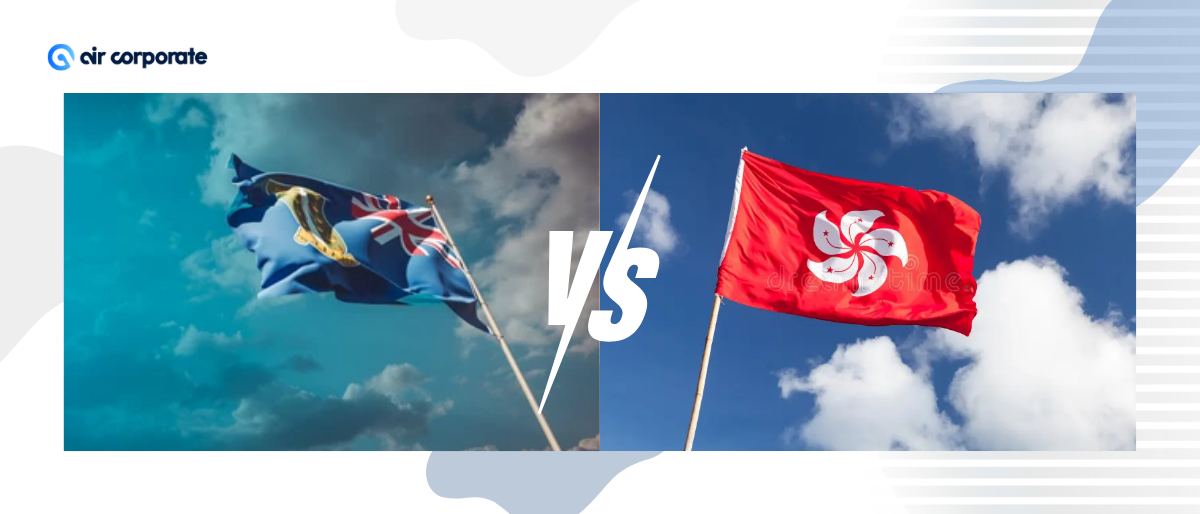
Opening offshore bank accounts in Hong Kong for a BVI company is one of the most common combinations in the offshore world, and one of the clearer pros of an offshore company structure. Hong Kong banks are experienced with BVI structures, accept remote account opening for many clients, and provide access to multi-currency accounts with full international wire transfer capabilities.
BVI Offshore Bank Account: What You Need to Know
Who Can Open a BVI Bank Account?
Individuals, BVI companies, and trusts can all open a bank account in the BVI. For corporate accounts, the requirements vary depending on the type of entity and the bank's specific policies. Opening an account in BVI is possible but subject to strict KYC and AML compliance checks. Most banks will assess the company owner's profile, the nature of the business, and the expected transaction volumes before approving an account.
KYC and AML Requirements
Every bank, whether in the BVI or in another jurisdiction, requires thorough Know Your Customer and Anti-Money Laundering checks before opening a bank account. The main goal during compliance checks is to evaluate whether a potential client's profile falls within the bank's risk appetite.
For a BVI offshore company, the required documents typically include the following:
- Certified copy of the certificate of incorporation
- Memorandum and articles of association
- Register of directors and register of shareholders
- Proof of identity for all directors and beneficial owners, including a valid passport or government-issued photo ID
- Proof of residential address, such as a utility bill or bank statement dated within three months
- Details of the business activities, source of funds, and expected transaction volumes
- Reference letter from an existing bank (required by most banks)
Documentation must typically be notarised or certified by a professional before submission. BVI offshore banks and international banks accepting BVI companies will not open accounts without complete, properly certified documentation.
Remote Account Opening
Most banks that work with BVI companies allow for entirely remote account opening, which is particularly useful for non-residents who cannot travel to the banking jurisdiction, provided all required documentation is submitted correctly.
No personal visit to the bank is required in most cases, though some banks may request a video call or in-person meeting for higher-risk profiles. Remote account opening availability varies depending on the bank and the client's country of residence.
Processing Times and Minimum Deposits
The approval process for a bank account opening typically takes between one and six weeks, depending on the bank and the complexity of the application. Minimum deposit requirements vary by bank.
For BVI and offshore bank accounts, the range is wide. BVI offshore banks and international banks accepting BVI structures set their own minimum initial deposit thresholds.
These typically range from USD 1,000 to USD 50,000. Many banks charge penalties if the account balance falls below the required minimum, so confirming this upfront is important.
How to Open a Bank Account for a BVI Company

The process for bank account opening follows a consistent sequence regardless of which jurisdiction you choose for banking. Here are the steps to follow:
Step 1: Incorporate your BVI company. The bank will require certified incorporation documents before processing any application. Your registered agent handles the BVI incorporation and provides the necessary company documents.
Step 2: Prepare KYC documentation. Gather certified copies of all required documents for every director and beneficial owner. This includes valid passport copies, proof of address such as a utility bill or bank statement, source of funds information, and a description of business activities.
Step 3: Choose the appropriate bank. Not all banks are equally receptive to BVI companies. Banks vary in their appetite for offshore structures, their required documentation, their minimum deposit requirements, and their processing times. Working with a corporate services provider who has established banking relationships significantly improves approval rates.
Step 4: Submit the application. Applications can be submitted remotely in most cases. The bank reviews the documentation, conducts compliance checks, and either approves the account or requests further information.
Step 5: Fund the account. Once approved, the account is funded with the minimum deposit. Most BVI bank accounts and offshore bank accounts operate in US dollars, though multi-currency accounts are available through many international banking partners.
BVI Company + Bank Account: Common Use Cases
Understanding how founders actually combine a BVI company with an offshore bank account helps clarify whether this structure fits your situation. Here are the most common applications:
- Holding company. An offshore company holds shares in operating companies in other jurisdictions. The bank account receives dividends and makes intercompany loans. This is one of the most common uses of a BVI offshore company globally.
- E-commerce and international trading. The company acts as the contracting entity for international sales. The bank account receives payments from customers worldwide in multiple currencies.
- Investment funds and asset holding. Offshore companies are widely used as vehicles for investment funds and for holding real estate, intellectual property, or financial assets. The bank account facilitates subscription payments and distributions.
- Cryptocurrency and digital assets. The BVI has clear frameworks for companies involved in crypto activities. A BVI company with a crypto license can operate alongside a corporate bank account, though finding a banking partner willing to serve crypto businesses requires additional due diligence.
- Wholly owned subsidiary. A BVI company can serve as the wholly owned subsidiary of a larger corporate group, holding specific assets or conducting specific activities while the parent company maintains control.
The Honest Trade-Offs
A BVI offshore company with an offshore bank account is a legitimate, widely used structure. But it is worth understanding the trade-offs honestly before committing.
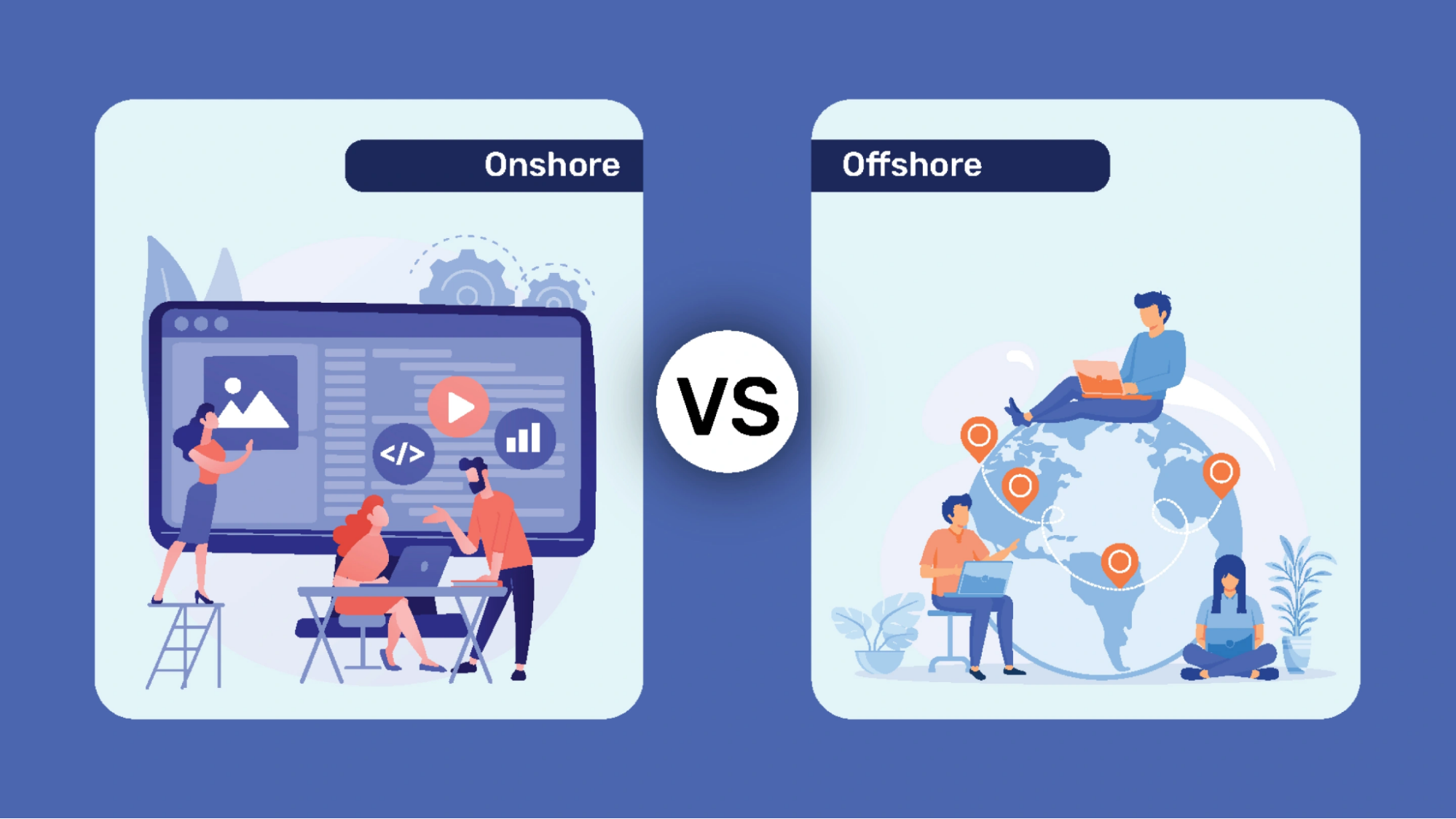
Advantages include no corporate tax, capital gains tax, or income tax on foreign-sourced income. Flexible governance with minimal public disclosure. Fast company formation. No requirement for local directors. Compatible with most international banking jurisdictions. Compared to onshore structures, a BVI offshore company also benefits from access to a mature legal system with appeal to the Privy Council.
The challenges are real too. BVI companies face increasing scrutiny at banks due to global AML requirements. Not every bank will accept a BVI company as a client. Documentation requirements are thorough. Beneficial owners must now file information with the BVI Registry of Corporate Affairs, which limits the privacy available compared to ten years ago. All of this is part of using an offshore company legally and responsibly.
Final Words
A BVI company takes 24 to 48 hours to incorporate. A bank account can take six weeks. That gap is where most founders underestimate the process.
The company is the easy part. The bank is where due diligence happens in full: on the company, on the directors, on the beneficial owners, on the source of funds, and on the nature of the business. Banks that have never seen a BVI structure before will apply extra scrutiny. Banks that see them every week have a process. The difference in outcome is significant.
This is why combining BVI company formation and bank account opening as one coordinated process, rather than two separate tasks, changes the experience entirely. KYC documents prepared to bank standard from day one, the right banking jurisdiction chosen based on the business model, and no rework when the bank asks for something the agent did not prepare.
At Air Corporate, we handle both sides of company formation through a licensed registered agent and corporate bank account opening, fully remotely, with no travel required.
Frequently Asked Questions
Can a BVI company open a bank account?
Yes. A BVI company can open a bank account either in the British Virgin Islands or in another jurisdiction. Most BVI companies bank outside the BVI in jurisdictions such as Hong Kong, Singapore, or Switzerland due to the more comprehensive banking services available there.
Does a BVI company pay tax?
BVI companies that operate outside the British Virgin Islands pay no corporate tax, capital gains tax, or income tax on foreign-sourced income. They pay annual government fees starting from USD 550 to maintain their registered status. BVI companies with relevant activities carried out in the BVI must meet economic substance requirements.
Is the BVI a tax haven?
The British Virgin Islands is widely described as a tax haven due to its zero-tax regime for offshore companies, but it is a regulated and internationally compliant jurisdiction. It is not blacklisted by the OECD or the EU and actively cooperates with international tax transparency frameworks including CRS and FATCA.
Air Corporate
Form your offshore company today
BVI, Cayman Islands, and Seychelles — fast remote incorporation with registered agent and compliance support, all in one place.

Author
Collin
Collin is an Accounting Manager who keeps the financial engine running smoothly for independent businesses and growing enterprises. With years of hands-on experience managing day-to-day accounting operations, he's the person who ensures your books are accurate, your financial reporting is timely, and your team (even if it's just you) has the systems and processes in place to stay organized as you scale.