Register your company in Hong Kong with our Special Anniversary discount!

Get Started!
Offshore Company Jurisdictions
6 Common Offshore Company Jurisdictions
  1. The Bahamas
  2. United Arab Emirates
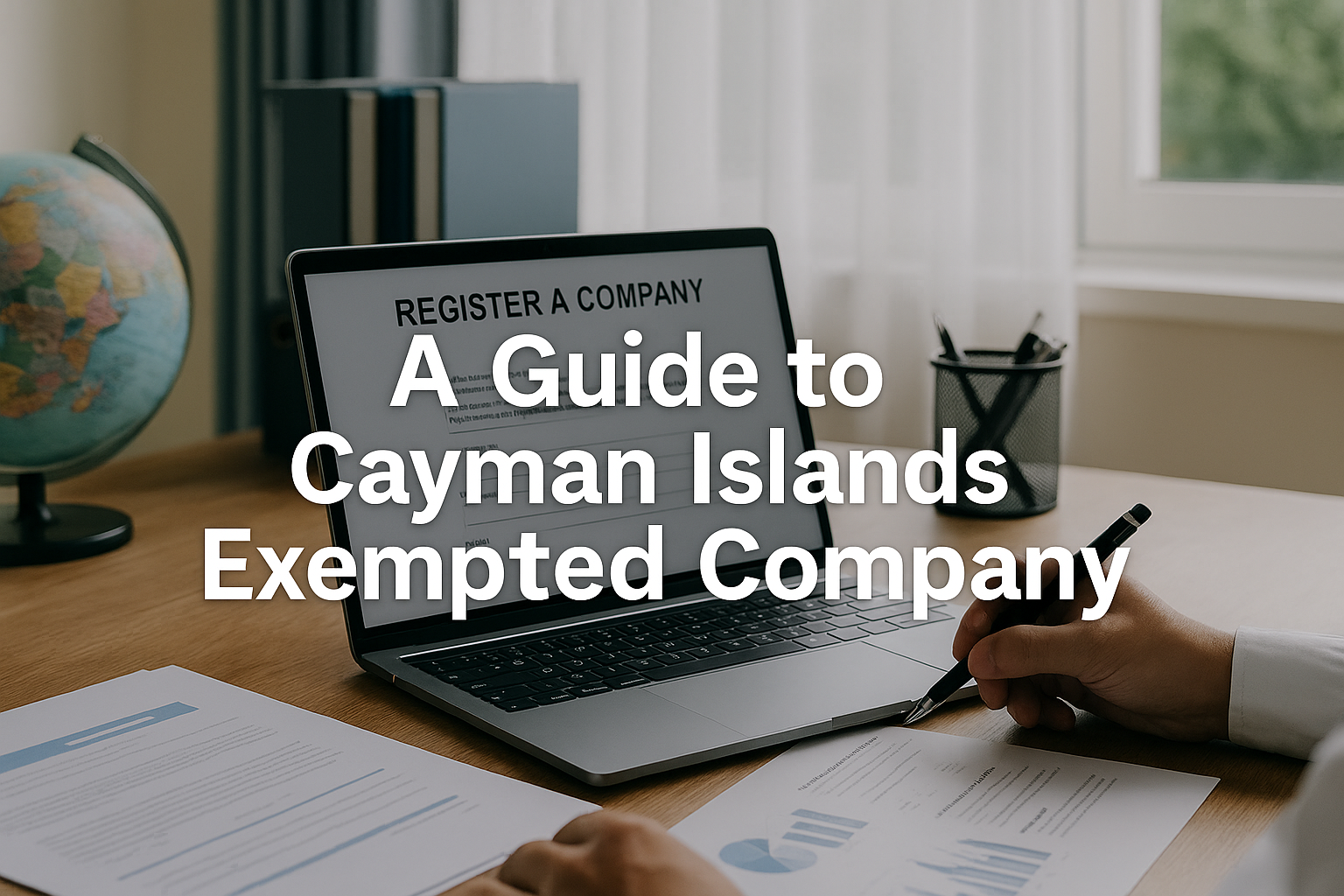
  3. Cayman Islands
  4. Singapore
  5. Isle of Man
  6. Hong Kong

Setting up a new venture is exciting.

But starting a company where you live may not always make sense due to local tax rates and regulatory complexity. For some use cases, choosing an offshore jurisdiction with the right legal regime, banking access, compliance burden, and tax rules can be a better fit.

Note

Large multinational groups may also face global minimum tax (Pillar Two) or domestic top-up taxes in some jurisdictions. Always assess group size and scope before planning.

Factors to Consider When Choosing an Offshore Jurisdiction

Selecting the right offshore jurisdiction is crucial for long-term tax efficiency, compliance, and banking success. Before forming your company, evaluate these core factors:

Purpose of Incorporation

Define whether your goal is holding, trading, financing, or IP management. The right offshore jurisdiction should align with your business model and target markets.

Reputation and Regulatory Stability

Choose a politically and legally stable jurisdiction. Check if it appears on the EU List of Non-Cooperative Jurisdictions (Annex I). 

As of October 10, 2025, the list includes American Samoa, Anguilla, Fiji, Guam, Palau, Panama, Russia, Samoa, Trinidad & Tobago, the U.S. Virgin Islands, and Vanuatu.

Tax Environment

Review the headline corporate income tax rate, withholding tax, VAT/GST applicability, and any economic-substance requirements under OECD and local laws.

Available Business Structures

Confirm that suitable entities are offered (e.g., IBC (International Business Company), LLC (Limited Liability Company), Ltd, Pte Ltd), and match them to your ownership and compliance needs.

Setup and Maintenance Costs

Compare incorporation fees, annual government charges, registered agent fees, and required accounting/audit costs to understand total annual expenses.

Compliance and Reporting Obligations

Confirm ongoing duties like bookkeeping, annual filings, and maintaining a Beneficial Ownership Register or Common Reporting Standard (CRS) submissions.

Banking and Financial Access

Assess the likelihood of opening a corporate bank account. Prefer jurisdictions with established KYC/AML frameworks, international corridors, and multi-currency or merchant capabilities.

Processing Time and Local Presence

Check realistic formation timelines and whether you need a resident director, local company secretary, or registered office to satisfy substance rules.

Tax Treaty Network

If double-tax relief or cross-border investment protection matters, verify the jurisdiction’s Double Taxation Treaty (DTT) coverage.

Types of Offshore Jurisdictions by Tax Incentives

When comparing offshore options, it helps to understand how jurisdictions structure tax incentives and compliance.

Zero-Tax Jurisdictions

These locations do not impose corporate income tax on foreign-sourced income. 

Companies typically pay fixed annual government fees and must meet minimum economic-substance and reporting standards to remain compliant.

Examples include the Bahamas and Cayman Islands.

Note

From 2025, Bermuda will introduce a 15% corporate income tax for in-scope multinational enterprises under the OECD global minimum tax framework.

Key Characteristics

  • No corporate tax on non-local or offshore income (subject to substance rules).
  • Light compliance and simplified filings.
  • Limited or no DTT networks.
  • Best for holding/fund/asset-protection structures that do not require treaty access.

Low-Tax Jurisdictions

These offer competitive tax rates, often between 8%-20%, along with strong treaty networks that support cross-border investment and reduced withholding tax.

Typical examples include Ireland, Luxembourg, the Netherlands, Switzerland, and Singapore.

Key Characteristics

  • Access to extensive DTT and FTA networks for international operations.
  • Transparent regulatory regimes that meet OECD and CRS standards.
  • Moderate reporting and substance requirements.
  • Suitable for headquarters, trading, or intellectual-property management structures seeking treaty benefits.

Best Jurisdictions for Offshore Companies in 2025

When selecting where to incorporate offshore, consider your company’s purpose, substance requirements, and banking priorities.

None of the jurisdictions below are on the EU Annex I list (non-cooperative jurisdictions) as of 2025.

Below are six leading offshore jurisdictions in 2025, each offering distinct tax, compliance, and business advantages.

1. The Bahamas

The Bahamas remains a practical choice for holding and service structures. 

Companies are typically formed as International Business Companies (IBCs) under the International Business Companies Act, 2000.

There is no corporate income tax on foreign-sourced income. 

Exchange control applies to residents and is administered by the Central Bank of The Bahamas; companies designated as non-resident for exchange-control purposes generally transact freely in foreign currency when operating abroad. 

Economic substance requirements apply for certain activities. 

Incorporation is commonly completed within a few days through licensed agents, subject to KYC.

2. United Arab Emirates (UAE)

The UAE offers modern free-zone frameworks and a clear, codified tax regime. 

Since 2023, corporate income tax applies at 9%, with 0% available to Qualifying Free Zone Persons on qualifying income where detailed conditions are met. 

From 2025, in-scope multinational groups may also be subject to a 15% Domestic Minimum Top-up Tax under Pillar Two. 

VAT is 5%. Free-zone companies (e.g., DMCC, JAFZA, ADGM) and RAK ICC (offshore registry) are available, noting that mainland trading requires the appropriate licence. 

Profit and capital repatriation are generally unrestricted. 

Activity scope and approvals vary by zone, so verification before incorporation is prudent.

3. Cayman Islands

Cayman remains widely used for funds, holding platforms, and investment vehicles. 

There is no corporate income, capital gains, or withholding tax. 

Economic-substance rules apply to relevant activities, and all entities file an annual Economic Substance Notification (ESN). 

Government fees are tiered by authorised share capital. 

Import duty is a practical consideration for goods brought into the islands, with typical rates in the low-to-mid-20% range depending on tariff classification. 

For asset-protection planning, creditor challenges to transfers are governed by the Fraudulent Dispositions Act (1996 Revision).

singapore company

4. Singapore

Singapore is a treaty-based, low-tax hub with robust governance and banking. 

The headline corporate tax rate is 17%, supplemented by partial exemptions and targeted incentives. 

GST is 9% (effective 1 January 2024). 

The Companies Act requires at least one director ordinarily resident in Singapore. 

The city-state maintains an extensive Double Taxation Treaty (DTT) and Free Trade Agreement (FTA) network and imposes no exchange controls, making it suitable for operating or holding structures that require reliable banking and treaty access.

5. Isle of Man

The Isle of Man offers a straightforward regime closely connected to the UK. 

Further, the standard corporate tax rate is 0%, rising to 10% for banking and large retail, and 20% for Isle-of-Man property income. 

The island participates in the UK–Isle of Man customs and VAT arrangement. 

As a non-EU jurisdiction, market access depends on sector and counterparties. 

Targeted relocation and innovation programmes are available, although the labour market is small and competitive.

6. Hong Kong

Hong Kong is an Asian financial centre with a territorial tax system and deep banking infrastructure. 

The standard vehicle is a private company limited by shares under the Companies Ordinance (Cap. 622). 

A company secretary is mandatory; if an individual, they must ordinarily reside in Hong Kong, though a Hong Kong body corporate may also serve. 

Profits tax follows two-tier rates: 8.25% on the first HKD 2,000,000 of assessable profits and 16.5% thereafter (7.5%/15% for unincorporated businesses). 

Under the FSIE regime (effective 1 January 2023 and expanded in 2024), specified foreign-sourced income—dividends, interest, royalties, and disposal gains on shares and certain non-equity assets—may be taxed when received in Hong Kong unless substance or nexus conditions are met. 

There are no exchange controls; Basic Law Article 112 protects the free movement of capital. 

The CEPA framework provides defined access to Mainland China in goods and services.

Choosing the Best Jurisdiction for Offshore Company Formation

Pick a jurisdiction that matches your model, likely substance needs, and banking reality. If you need DTT access, lean toward treaty hubs; if simplicity matters, weigh annual fees, filings, and realistic timelines.

If the business-friendly environment of Hong Kong attracts you, we will be happy to help you explore the city further.

For Hong Kong, Air Corporate can incorporate your company, act as company secretary, and prepare bank-ready KYC within standard timelines.

So get in touch with us right away to get one step closer to your dream!

Read more articles about Company Formation

View All
Register an Offshore Company in BVI

Company Formation

BVI Offshore Company Formation

Offshore Companies: Are They Right for Your Business?

Company Formation

Offshore Companies: Are They Right for Your Business?

why companies register in the Bahamas

Company Formation

Why Companies Register in the Bahamas

Ready to Jumpstart your Hong Kong Business?

Our team is always here to assist you

HeroImage
WhatsAppIcon