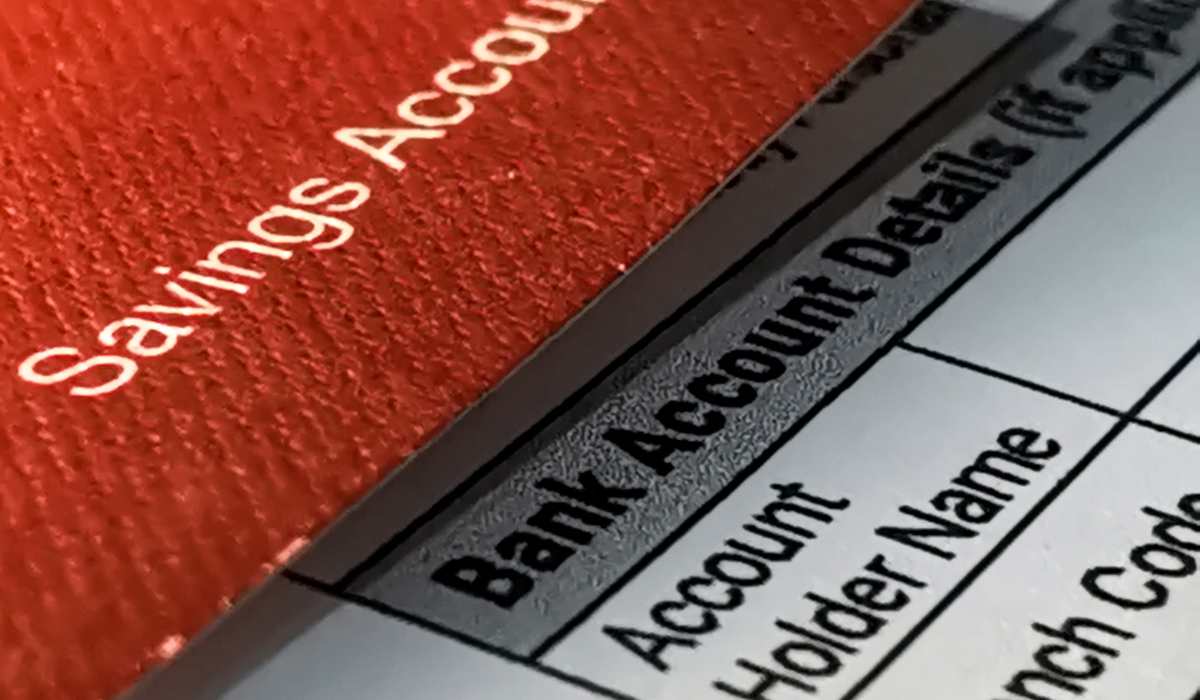

Most corporate bank account applications in Hong Kong fail not because of the business itself, but because of missing or incorrect documents. Banks here operate under strict anti-money laundering (AML) obligations, and a single gap in your paperwork is enough to trigger a rejection or a weeks-long delay. This article gives you the complete checklist before you apply, covering all bank types, both resident and non-resident directors, and the specific details that compliance teams actually scrutinise.
Highlights of this article
- There are two distinct approval phases: document verification and KYC/AML review. Most rejections happen in Phase 2.
- You need three categories of documents: company records, director and signatory ID, and business substance evidence.
- Traditional banks (HSBC, Hang Seng, BOC) and digital banks (Airwallex, Aspire, Currenxie) have meaningfully different requirements.
- Non-resident directors need notarised or apostilled copies of passports and proof of address.
- A vague business description is the single most common cause of rejection at the KYC stage.
- Approval timelines range from 1 to 5 days (digital banks) to 4 to 8 weeks (traditional banks).
The Two Phases of Corporate Account Approval
Before you compile your documents, it helps to understand what banks are actually doing when they review an application. There are two distinct phases, and they require different types of preparation.
Phase 1: Document Verification
This is the administrative check. The bank confirms that your company is legally registered, that the documents you have submitted are current, and that the names, dates, and company numbers are consistent across every form. A missing document, an expired Business Registration Certificate, or a director whose proof of address is four months old will fail here before anyone reads your business plan.
This phase is largely mechanical. You can pass it reliably by following the checklist in the next section exactly.
Phase 2: KYC/AML Review
This is where the real scrutiny happens, and where most rejections occur. A compliance officer or automated system assesses whether the business is legitimate, whether the ownership structure is transparent, and whether the expected transaction patterns are consistent with what you have described.
Banks are particularly cautious about:
- Companies with directors or shareholders from high-risk jurisdictions
- Businesses with no evidence of existing activity (no customers, no contracts, no website)
- Generic business descriptions that could apply to any entity ("trading company", "import/export")
- Ownership structures with nominee directors or complex offshore layering
Understanding this distinction matters because Phase 1 and Phase 2 failures require different remedies. A Phase 1 failure is fixed by getting the right documents. A Phase 2 failure requires you to build a more credible business narrative.
Core Document Checklist
The following three-part checklist covers what is required by virtually all banks in Hong Kong, whether traditional or digital. Some banks may request additional items depending on your industry, transaction volumes, or ownership structure.
A. Company Documents
- Certificate of Incorporation (original or certified copy)
- Business Registration Certificate (current, not expired)
- Articles of Association and Memorandum of Association
- Company search or NAR1 form from the Companies Registry (shows current directors and shareholders)
- Register of Directors
- Register of Shareholders (Register of Members)
- Significant Controllers Register (required since 2018 under the Companies Ordinance)
- Registered address proof (tenancy agreement or registered address service agreement)
A few points on company documents worth noting:
The Business Registration Certificate must be current at the time of application. If it expires within 30 days, renew it first. Banks will not accept an expired BRC under any circumstances.
The NAR1 form (Annual Return) is the Companies Registry document that shows your current directors and shareholders. Banks use it to cross-check the Register of Directors and Register of Shareholders. If you have recently changed directors but have not yet filed the updated return, submit the ND2A (notice of change of director) as a supplement.
The Significant Controllers Register is a statutory requirement for all Hong Kong limited companies. If your company secretary has not prepared this, they must do so before you apply.
B. Director and Signatory Documents
- Passport (all directors and authorised signatories), must be valid with at least 6 months remaining
- Proof of residential address (utility bill or bank statement, issued within 3 months), all directors
- HKID card (for Hong Kong resident directors)
- Board resolution authorising the account opening and naming the authorised signatories
The board resolution is often overlooked by applicants who prepare their own documents. It must state the name of the bank, the type of account being opened, and the full names of the individuals authorised to operate the account. Many banks provide a standard template on their website; use it rather than drafting your own.
For proof of address, banks are strict on the 3-month rule. A utility bill dated four months ago will be rejected. If a director does not receive utility bills in their own name (for example, if they live in serviced accommodation), a bank statement from their personal bank, addressed to their residential address, is an acceptable substitute.
C. Business Substance Documents
- Business plan or business description (1 to 2 pages)
- List of major customers and suppliers, with country of incorporation or residence
- Invoices, contracts, or letters of intent (LOIs) if available
- Source of funds declaration
- Website, LinkedIn profile, or other marketing materials
These documents are used in Phase 2 (KYC review) rather than Phase 1. They are not about proving legal compliance; they are about demonstrating that the business is real and comprehensible to a compliance officer.
See the dedicated section on business descriptions below for guidance on what banks actually want to see in these materials.
Requirements by Bank Type
Not all banks apply these requirements identically. The table below summarises the key differences between traditional banks and digital business account providers operating in Hong Kong.
| Requirement | Traditional banks (HSBC, Hang Seng, BOC) | Digital banks (Airwallex, Aspire, Currenxie) |
|---|---|---|
| In-person visit | Often required for at least one director | Remote only, no branch visit needed |
| Business plan | Required | Required |
| Local business activity | Expected; purely offshore businesses face scrutiny | More flexible; offshore clients accepted |
| Director residency | Preference for HK-resident directors | Non-resident directors accepted |
| Approval time | 4 to 8 weeks | 1 to 5 business days |
| Minimum deposit | HKD 10,000 to HKD 50,000 (varies by account type) | None or very low |
| Monthly fee | Typically none if minimum balance is maintained | Subscription model from USD 49/month |
| Application fee | None | None (subscription begins after approval) |
For most businesses without a physical presence or local directors in Hong Kong, a digital bank is the practical starting point. You can open an Airwallex or Aspire account remotely within days, then pursue a traditional bank account in parallel if your business requires it. Our best business bank accounts in Hong Kong guide covers the full comparison.
Resident vs Non-Resident: Additional Requirements
If all of your directors are Hong Kong residents with valid HKIDs, your application is treated as straightforward by most banks. If any director is a non-resident, expect the following additional requirements.
For Non-Resident Directors
Certified true copies of passport and proof of address. A simple photocopy is not sufficient. The copies must be certified by a solicitor, notary public, CPA, or bank officer. Some banks specify that certification must occur within 3 months of the application date.
Notarisation or apostille. For directors based in countries that are not party to the Hague Convention on apostilles, some banks require full notarisation of documents by a local authority in the director's home country, followed by legalisation at the Hong Kong consulate. This process can take 2 to 4 weeks, so factor this into your timeline.
Bank reference letter. Traditional banks frequently require a reference letter from the director's existing personal or business bank, confirming the relationship and account standing. Digital banks generally do not require this.
Video verification. Digital banks typically substitute branch visits with a video call or automated identity verification (such as a selfie with passport). This is usually faster and less burdensome than the in-person requirements of traditional banks.
For more detail on the non-resident process, see our dedicated guide to non-resident bank account opening in Hong Kong.
For Companies with Offshore Shareholders
If your Hong Kong company is owned by an offshore holding company (for example, a BVI or Cayman entity), the bank will require corporate documents for the holding company as well, including its certificate of incorporation, register of shareholders, and proof of registered address. Expect to provide a full corporate structure chart showing the ultimate beneficial owners (UBOs) down to the individual level.
Business Description: What Banks Actually Want to See
This is where the majority of applicants make mistakes. A business description that reads like a general company overview is almost always insufficient for KYC purposes.
Banks are not looking for marketing copy. They are looking for answers to five specific questions:
- What does the company actually sell or provide? Not a category ("consulting services") but a specific description ("regulatory compliance consulting to pharmaceutical companies in Southeast Asia, focused on market entry requirements").
- Who are the customers? Industry sector, size, and geography. "SMEs in Singapore and Malaysia" is more useful to a compliance officer than "businesses across Asia".
- Who are the suppliers or counterparties? Same level of specificity.
- What are the expected monthly transaction volumes? Provide a realistic range: inbound receipts, outbound payments, and approximate amounts in HKD or USD.
- Why is a Hong Kong account needed? If your customers are in Europe and your suppliers are in the US, a compliance officer will want to understand the Hong Kong nexus. A clear answer (for example, "we are incorporated here and our operations are managed from Hong Kong") prevents unnecessary back-and-forth.
Suggested structure for a business description document:
Company overview (2 to 3 sentences on what the company does and when it was incorporated)
Products or services (specific, not generic)
Target customers (industry, geography, typical deal size)
Key suppliers or partners (names and countries if possible)
Expected account usage (monthly inbound: approx. HKD X; monthly outbound: approx. HKD Y; primary currencies; main counterparty countries)
Reason for banking in Hong Kong
This document does not need to be long. One to two pages is sufficient. What matters is specificity, not length.
Common Rejection Reasons
The table below covers the most frequent causes of rejection and how to prevent each one.
| Rejection reason | How to prevent it |
|---|---|
| Incomplete document set | Use the three-part checklist above. Have your company secretary review every item before submission. |
| Expired Business Registration Certificate | Renew your BRC before applying. Check the expiry date on the certificate itself. |
| Director's proof of address older than 3 months | Check the date on every utility bill or bank statement. Replace any that fall outside the 3-month window. |
| Vague business description ("import/export", "trading") | Follow the business description structure above. Be specific about products, customers, and geographies. |
| No evidence of existing business activity | Attach at least one invoice, LOI, or signed contract. A website or LinkedIn profile also helps establish credibility. |
| High-risk jurisdictions in customer or supplier list | Be prepared to explain these relationships in detail. Banks may request enhanced due diligence on counterparties in flagged countries. |
| Mismatch between business description and actual transactions | Ensure your projected transaction volumes and counterparty countries are consistent with your description. Inform the bank if the business evolves. |
| Company name or director associated with flagged entities | Run a basic sanctions and adverse media check on all directors before applying. |
How to Prepare a Strong Application: 5 Practical Tips
1. Have your company secretary review documents before submission
Your company secretary is responsible for maintaining your statutory registers and ensuring compliance. Before you submit a bank application, ask them to confirm that the NAR1, Register of Directors, Register of Shareholders, and Significant Controllers Register are all current and consistent with each other. Inconsistencies between these documents are a frequent cause of delays.
2. Apply to a digital bank while your traditional bank application is in progress
Traditional bank applications take 4 to 8 weeks. There is no reason to wait. Submit your digital bank application in parallel. You will likely receive approval within a week, which means you can start operating the business account, receiving payments, and building a transaction history, all of which will strengthen your eventual traditional bank application.
3. Show evidence of customers, even at an early stage
Banks understand that new companies do not yet have a full order book. What they want to see is that the business is real and that customers exist. A letter of intent from a potential client, a signed service agreement, or even a formal quote sent to a named customer counts as evidence of business activity.
4. Set up a Hong Kong phone number and business email
A Hong Kong phone number and a domain-based business email address (for example, yourname@yourcompany.com) signal local presence and operational credibility. These are small details, but compliance officers notice when a bank account application includes only a Gmail address and a foreign mobile number.
5. Be consistent across all documents
Every document in your application should tell the same story. The company name on your Certificate of Incorporation must match the name on your BRC and your board resolution. The director's name on the passport must match the name on the Register of Directors. Review your application as a package, not as individual items.
For a broader introduction to what a corporate account is and how it differs from a personal account, see our overview article. And if you are still at the incorporation stage, our guide on how to register a company in Hong Kong covers the steps before you reach the banking stage.
Air Corporate handles corporate bank account opening from HKD 3,000, including document preparation, business description drafting, and liaison with the bank on your behalf. View our bank account opening service