“Vivian and the team are always available to help me clarify things about running a company in HK. It is immeasurably helpful to have someone who really understands t...”
RADHESH VIJAYAN
Our experienced accountants handle audits and tax filing with precision and efficiency. Fully digital process with prompt communication.

4.9
Excellent

“Vivian and the team are always available to help me clarify things about running a company in HK. It is immeasurably helpful to have someone who really understands t...”
RADHESH VIJAYAN
“Vivian and team are very professional and friendly. They support us to verify business entity with facebook and google using their local phone. I recommend Air corpo...”
Thanh Van An Nguyen
“Air Corporate has been assisting me for four years with the creation, management, and accounting of my business. Their service is very good and Vivian's staff are ve...”
Client content
In Hong Kong, all limited companies must undergo an annual audit to comply with legal requirements and the standards set by the Inland Revenue Department (IRD).
A registered Certified Public Accountant (Practising) is responsible for reviewing the company's financial statements and preparing an audit report.
This audit report, along with the tax computation and Profits Tax Return, must be submitted to the IRD to meet regulatory obligations, even if no tax may be payable in Hong Kong.
Let Certified Public Accountants (CPAs) guide you through the entire process, from preparing audited financial statements to completing your audit and tax filing.
Never miss a deadline. We handle your tax filings with precision, ensuring full compliance with government regulations and accounting standards.
Forget paperwork. Our fully digital platform keeps your financial records secure and accessible anytime, all in one place.
With transparent pricing tailored to your business needs, you avoid unexpected fees and penalties. You get straightforward, hassle-free service.
Providing complete records upfront makes the audit smoother and reduces follow-up questions from the accountant and CPA.
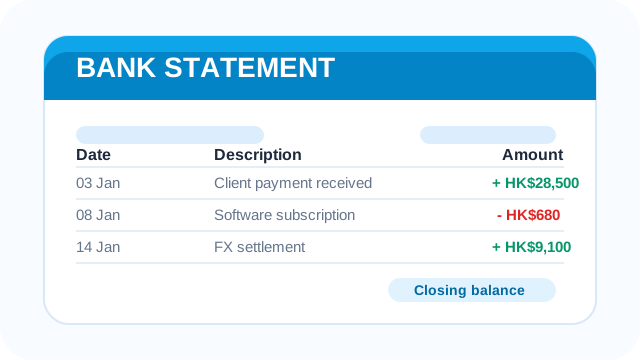
Statements for every company account across the full financial year so balances and transactions can be reconciled properly.
Examples
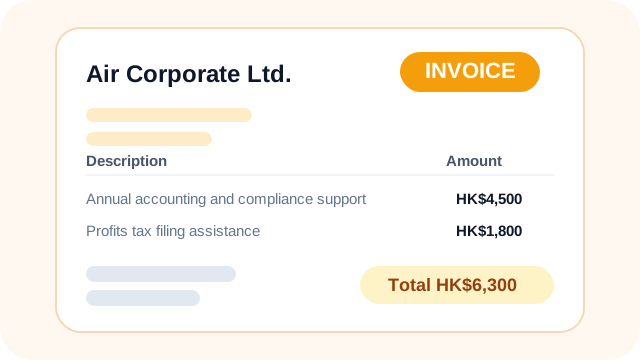
The invoices behind your income and expenses, used to support revenue recognition, costs, and bookkeeping entries.
Examples
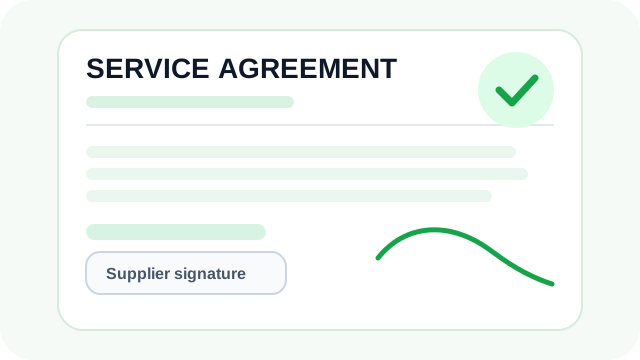
Commercial agreements that explain the nature of your transactions and the relationship with customers, vendors, or partners.
Examples
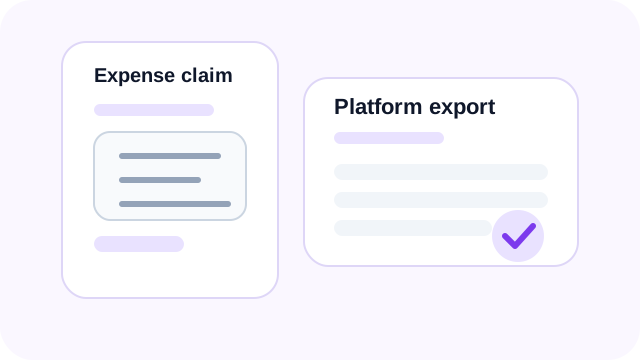
Additional supporting records that help demonstrate the substance of your operations and explain transactions that are not obvious from invoices alone.
Examples
Transparent and flexible pricing, tailored to match your business revenue. Get the right level of support at a cost that fits your budget.
Starting from
HK$4,500
Includes:
Extended Due Date: 2 June
Electronic Filing Extended Due Date: 2 June
Extended Due Date: 15 September
Electronic Filing Extended Due Date: 15 September
Extended Due Date: 15 December
Electronic Filing Extended Due Date: 15 December
Extended Due Date: 31 January
Electronic Filing Extended Due Date: 31 January
We start with a short overview of your company so we can scope the audit properly, confirm the timeline, and flag any tax or compliance points early.
Company profile
Your company name, incorporation details, financial year end, business activity, and whether the company is active, dormant, or newly formed.
Ownership and management structure
Shareholders, directors, ultimate beneficial owners, and any related companies or connected parties relevant to the accounts.
Operations snapshot
Main customers, suppliers, countries involved, currencies used, and whether revenue is earned in or outside Hong Kong.
Tax and filing context
Any prior Profits Tax Return, offshore claim position, existing accountant or auditor history, and important IRD deadlines already received.
Trial balance
A summary of all account balances for the financial year, used as the starting point for preparing the audit file and tax computation.
Income statement
Your profit and loss statement showing revenue, cost of sales, and expenses for the year under review.
Balance sheet
A snapshot of the company's assets, liabilities, and equity at year end.
General ledger
The detailed transaction-level breakdown behind each account balance so we can review postings and supporting entries.
Prior audit report (if available)
The previous year's signed audited financial statements and report, which help maintain continuity and identify opening balances correctly.
Corporate secretary documentation
Documents such as the Annual Return, Business Registration Certificate, shareholding records, and statutory changes that support the audit file.
Once the scope and documents are confirmed, we align on milestones, begin the audit work, and keep you informed through completion.
Timeline confirmation
We confirm the review schedule, expected questions, outstanding items, and filing target date with you upfront.
Audit and tax preparation
Our team organizes the working file, coordinates with the CPA, prepares the tax computation, and follows up on any missing support.
Final filing package
You receive the audit report, financial statements, and Profits Tax Return package ready for submission and future reference.
A financial audit is an independent review of a company's financial statements to ensure accuracy and compliance with accounting standards.
Yes, all Hong Kong-incorporated limited companies must undergo an annual audit conducted by a Certified Public Accountant (Practising).
An audit includes reviewing financial records, assessing compliance with accounting standards, verifying transactions, and preparing an audit report.
Gather financial records (e.g., bank statements, invoices). Submit records to a CPA for review. The CPA verifies transactions and compliance. An audit report is prepared. The report, tax computation, and Profits Tax Return are submitted to the IRD.
Auditors are Certified Public Accountants (Practising) registered in Hong Kong and authorized to conduct statutory audits.
Pricing is based on company revenue, transaction volume, and complexity, with transparent, fixed-fee options available.
Yes, even dormant companies must undergo an audit, though they may qualify for simplified reporting.
Yes, companies can apply for an extension through the Inland Revenue Department, subject to approval.
Non-compliance may result in penalties, rejected tax filings, or legal consequences, impacting financial credibility.
Work with experienced accountants who manage your annual audit, profits tax filing, and supporting documentation through a fully digital process with clear communication.