


Most dividends are not taxed in the hands of shareholders in Hong Kong.
Hong Kong’s territorial system taxes Hong Kong-sourced profits; foreign dividends are generally outside scope unless the Foreign-sourced Income Exemption (FSIE) rules apply.
There is no Hong Kong withholding tax on dividends or interest.
Interest on deposits with authorized institutions is generally exempt for non-financial institutions; exceptions apply.
FSIE can tax foreign-sourced dividends received in Hong Kong by MNE constituent entities that do not meet economic substance or participation conditions.
Use Double Taxation Agreements (DTAs) to reduce foreign withholding tax at source.
When a company earns profits, it may share them with shareholders as dividends. If you hold shares, you may receive cash or stock dividends.
But as with any source of income, one question comes up: do you have to pay tax on dividends in Hong Kong?
Types of Dividend Income in Hong Kong
1. Cash vs. Stock Dividends
- Cash dividends are paid directly to shareholders, usually through a bank or brokerage account.
- Stock dividends are issued as additional shares instead of cash, increasing the shareholder’s equity stake.
2. Regular vs. Special Dividends
- Regular dividends are recurring distributions made as part of a company’s normal profit allocation.
- Special dividends are one-off payments, typically arising from exceptional events such as asset sales or surplus profits.
How Hong Kong Taxes Dividends
Hong Kong uses a territorial tax system. Dividends received by shareholders are not taxed in the recipient’s hands (individuals and most standalone Hong Kong companies).
Foreign-sourced dividends are also generally not chargeable unless the FSIE rules apply.
FSIE: When Foreign Dividends Can Be Taxable
Since January 1, 2023 (expanded on January 1, 2024), certain foreign-sourced income received in Hong Kong by a constituent entity of a multinational enterprise (MNE) group is deemed taxable unless an exception applies.
For dividends, the main gateways are:
- Economic substance (relevant for certain categories), and
- Participation exemption (shareholding and subject-to-tax conditions, with anti-hybrid/anti-abuse rules).
If you are not an MNE constituent entity, Foreign-sourced Income Exemption (FSIE) generally does not apply to your dividends.
Interest, Capital Gains, and Related Tax Points in Hong Kong
Interest on Bank Deposits
Interest income earned by non-financial institutions from deposits placed with authorized institutions in Hong Kong is generally exempt from Profits Tax under the Exemption from Profits Tax (Interest Income) Order (Cap. 112T), subject to conditions and restrictions.
The exemption may not apply where the deposit secures a borrowing and the related interest expense is deductible.
Interest that is revenue in nature (for example, money-lending or other interest-generating activities carried on as part of a trade) can be taxable under Hong Kong’s territorial Profits Tax rules.
FSIE: Foreign-Sourced Interest Received in Hong Kong (MNE Groups)
Under FSIE, foreign-sourced interest (as well as certain dividends and disposal gains) received in Hong Kong by an MNE constituent entity may be treated as taxable unless the relevant economic substance or other applicable conditions are met.
Capital Gains and Disposal Gains
Hong Kong does not impose a standalone capital gains tax. However, disposal gains can still be taxable if they are revenue in nature (that is, the disposal forms part of a trade or profit-making activity).
Tax Certainty Enhancement Scheme (Onshore Equity Disposal Gains)
For disposals on or after January 1, 2024, Hong Kong’s Tax Certainty Enhancement Scheme can provide safe-harbor treatment so that qualifying onshore equity disposal gains are treated as capital in nature (and therefore not chargeable to Profits Tax), provided the statutory conditions are met.
Why Dividends Are Usually Not Taxed in Hong Kong
In Hong Kong, dividends are generally exempt from tax liability in the shareholder’s hands—this is a recipient-level non-taxation rule, not a “because the company already paid Profits Tax” concept.
Under FSIE, foreign-sourced dividends received in Hong Kong by an MNE constituent entity may be taxable unless the relevant substance/participation conditions are met.
Withholding Taxes on Foreign Dividends
- Hong Kong does not levy withholding tax on dividends or interest.
- Foreign dividends paid to Hong Kong investors may be subject to overseas withholding tax in the source country (and the rate often depends on that country’s domestic law and any applicable double tax agreement).

Profits Tax and Dividends
- Profits Tax applies at the company level to taxable profits arising in or derived from Hong Kong
- Dividends received by shareholders are generally not taxable in Hong Kong, even if the paying company earned chargeable profits in Hong Kong.
- FSIE carve-out (MNE groups): foreign-sourced dividends received in Hong Kong by an MNE constituent entity may be taxable unless the relevant FSIE conditions (for example, the economic substance requirement or other applicable exception such as the participation exemption) are met.
What Are the Exceptions to Non-Taxable Dividends?
Do I Need to Pay Tax on Dividends from a Hong Kong Company?
Dividends received by shareholders are typically not taxable in Hong Kong.
Exception (FSIE for MNE groups): If you are an MNE constituent entity, foreign-sourced dividends received in Hong Kong can be chargeable to Profits Tax unless you satisfy an applicable FSIE exception (for example, economic substance or participation).
Foreign-Sourced Income Exemption (FSIE)
Effective Dates
- From January 1, 2023: FSIE applies to foreign-sourced dividends, interest, IP income, and equity-interest disposal gains received in Hong Kong by an MNE entity.
- From January 1, 2024: scope of foreign-sourced disposal gains expanded to cover all types of property (not only equity interests).
Who It Applies To
- Members of an MNE group (that is, an MNE entity/constituent entity), not ordinary standalone local businesses.
Income Covered
- Dividends
- Interest
- IP income
- Disposal gains (including equity interest disposal gains and other disposal gains from 2024)
How Foreign-Sourced Dividends Can Stay Exempt
Foreign-sourced dividends received in Hong Kong are generally not brought into charge if the MNE entity meets an applicable exception, including:
- Economic substance requirement (relevant for dividends, interest, and non-IP disposal gains)
- Participation requirement (available for dividends and equity interest disposal gains)
- Nexus requirement (relevant for qualifying IP income / IP disposal gains)
Anti-Abuse Safeguards (FSIE)
- FSIE includes anti-abuse features (for example, safeguards connected to participation-based exemption).
Double Taxation Agreements (DTAs)
Hong Kong’s DTAs can lower foreign withholding tax on dividends paid to Hong Kong tax residents. Rates and eligibility vary by treaty (for example, common reduced rates are 5%–10% for qualifying corporate holdings).
Do not rely on static tables; always consult the Inland Revenue Department (IRD)’s live treaty rate page and Notes for holding-period and “qualifying company” conditions.
Air Corporate can prepare tax residency certificates, analyze treaty eligibility, and handle treaty forms to secure reduced foreign withholding tax.
How to Declare Dividend Income in Hong Kong?
For Hong Kong Companies
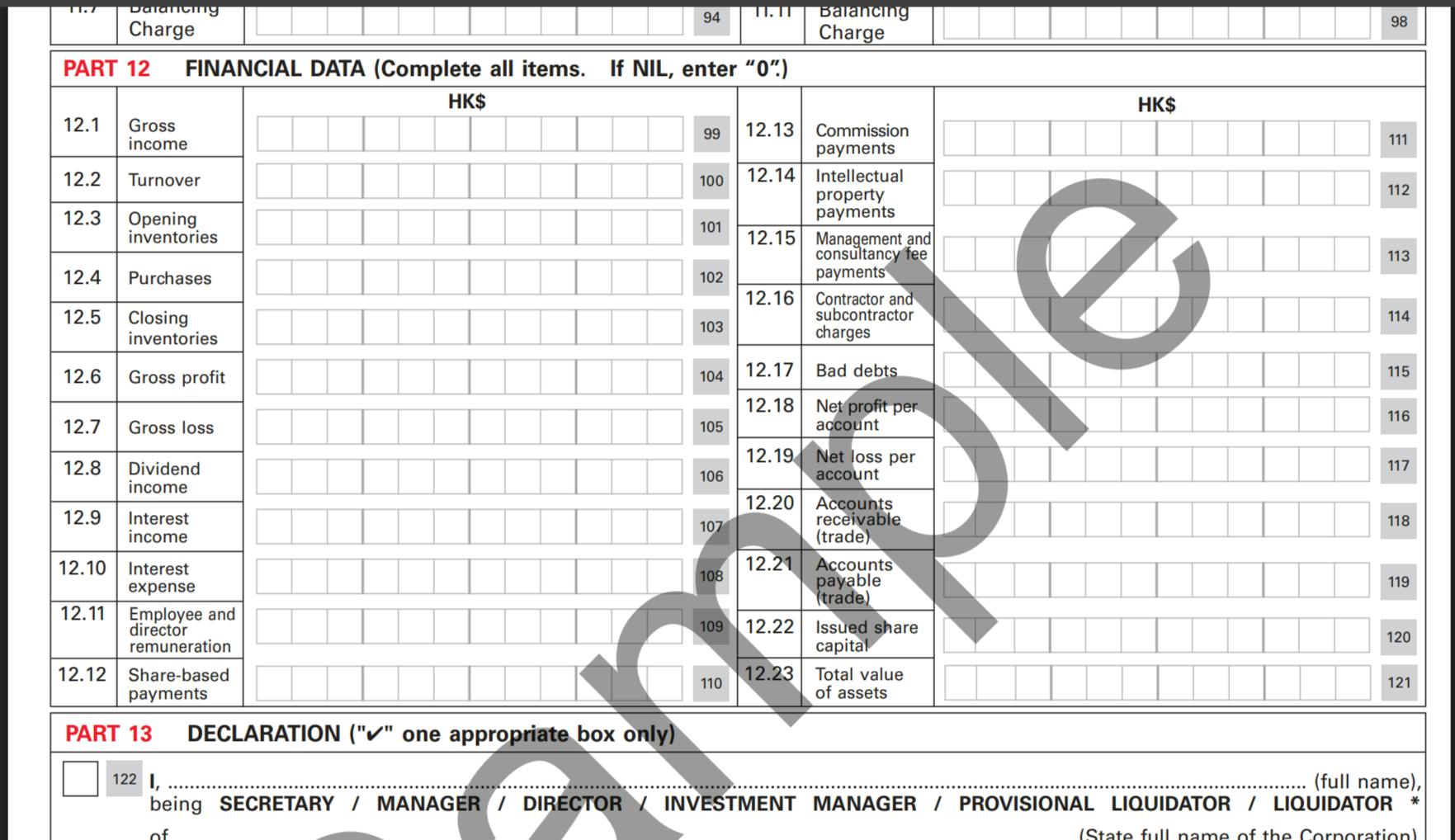
- File the Profits Tax Return (BIR51) with audited financial statements and a tax computation.
- Use eTAX for electronic filing where applicable.
- Avoid hard-coding box numbers in public content—BIR51 formats and supplementary requirements (including FSIE-related disclosures) can change based on IRD updates.
- Non-compliance with tax reporting and audit requirements may trigger penalties under the Inland Revenue Ordinance (Cap. 112).
For Individuals in Hong Kong
- Dividends are generally not included under Salaries Tax or personal assessment.
- For foreign dividends, check whether withholding tax was applied in the source country and whether double tax agreement (DTA) relief or a credit may be available (depending on your circumstances).
For the most updated tax guidelines, refer to the Hong Kong Inland Revenue Department (IRD).
What are the Differences Between Capital Gains and Dividends?
The key difference is what causes the profit:
- Capital gains come from selling an asset for more than you paid.
- Dividends come from holding shares and receiving a payout from the company.
Capital Gains
Profit on disposal of an asset. Hong Kong has no capital gains tax, but onshore gains that are revenue in nature can be taxable.
Dividend Tax
Distributions of a company’s profits to shareholders. In Hong Kong, dividends are not taxed in the recipient’s hands (subject to FSIE for MNE entities on foreign-sourced dividends received in Hong Kong).
Economic Substance Requirement
If your Hong Kong company is in an MNE group and receives foreign dividends in Hong Kong, it generally needs enough substance in Hong Kong to keep the dividends exempt under FSIE.
- Maintain economic substance in Hong Kong (appropriate people, premises, and operating expenditure for your activities).
- Pure equity holding companies may meet a lighter test focused on holding/managing equity interests and meeting Hong Kong filing duties.
- Outsourcing is permitted if you retain real oversight and control in Hong Kong and keep robust documentation.
- Keep clear records of decisions, personnel, and costs to support FSIE positions with the IRD.
Ready to Invest in Hong Kong?
For most investors, dividends are not taxable in Hong Kong.
If you’re part of a corporate group, check whether your Hong Kong entity is an MNE group entity. If yes, confirm the FSIE rules before receiving foreign dividends in Hong Kong.
- For foreign dividends, check whether withholding tax was taken in the source country. Use tax treaties (DTAs) where available, and keep proof for treaty claims.
- For companies, file the Profits Tax Return (BIR51) (use eTAX where available) and follow IRD updates.
Need help checking FSIE or foreign withholding tax? Air Corporate can help you review the facts and file correctly.
FAQs
Dividends are not taxed in the shareholder’s hands in Hong Kong.
If a multinational enterprise (MNE) constituent entity receives foreign-sourced dividends in Hong Kong, the Foreign-sourced Income Exemption (FSIE) rules may apply and the dividends can be taxable unless the exemption conditions are met.
Hong Kong taxes income based on source, not residence. Income that is generally not taxed includes:
- Dividends received by shareholders (subject to the FSIE caveat for MNE entities).
- Capital gains (though disposal profits may be taxable if they are revenue in nature).
- Interest on bank deposits with authorized institutions for non-financial institutions, subject to conditions.
- Profits sourced outside Hong Kong, unless FSIE applies to certain foreign-sourced income received in Hong Kong by MNE entities.
Income arising in or derived from Hong Kong, including:
- Employment income for services rendered in Hong Kong.
- Business profits sourced in Hong Kong.
- Rental income from Hong Kong property.
Foreign-sourced income is generally outside scope unless FSIE applies to an MNE entity when the income is received in Hong Kong.
Yes, in most cases. Dividends (local or foreign) are generally not taxable for the recipient.
However, for MNE constituent entities, foreign-sourced dividends received in Hong Kong may be taxable under FSIE unless the economic substance or participation conditions (as applicable) are satisfied.


